
-
Whatsapp 99 11 13 72 77
-
Email contact@thymedental.com
-
Call us 0124-4810777
Whatsapp 99 11 13 72 77
Email contact@thymedental.com
Call us 0124-4810777
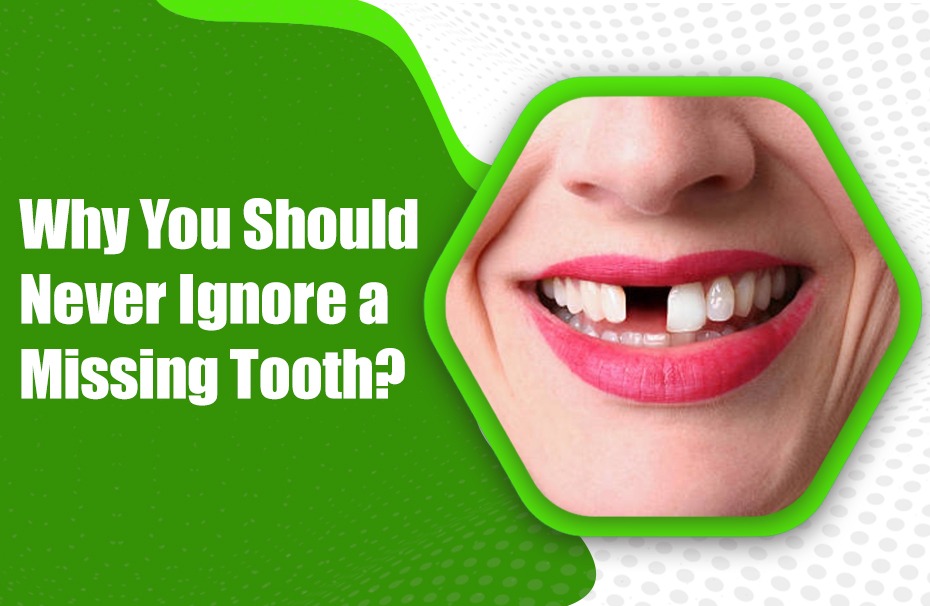
When you lose a tooth, the immediate reaction depends entirely on where it happens. If you knock out a front tooth in a cricket match or an accident, the panic is instant. You rush to the dentist because the impact is visible, embarrassing, and impossible to hide.
But what if you lose a molar? What if that missing tooth is tucked away at the back of your mouth, hidden when you smile?
For many people, the reaction is a shrug. We tell ourselves, “It’s just one tooth. No one can see it. I can still chew on the other side. I’ll deal with it later.”
The “out of sight, out of mind” mentality is one of the most dangerous traps of poor dental health. The fact is that the mouth is a complex and balanced machine. Each tooth from the front (incisors) to the back (molars) plays an important role in keeping the machine working correctly. When one of these cogs is removed from the machine, it’s not an “even split” where the entire machine comes to a screeching halt — the machine continues to work for a while, but it begins to “fall apart” piece by piece.
The loss of a gap does not mean you will continue to have a cosmetic issue. The gap provides an avenue for the slow-motion and money-sucking domino effect of dental issues that can be painful and structurally damaging to fix later. Whether it is a front tooth or a back molar, here is why you need to consider missing tooth treatment immediately.
We’ll begin by addressing the first point: a lost front tooth is aesthetically damaging and thus creates a crisis for the individual due to its impact on their confidence and the way others perceive them. It also creates an immediate problem when the individual starts to communicate because it affects both speech and how we sound.
The “Sound” Factor: Why You Are Talking Differently
Have you ever thought about the role that teeth play in communicating? Teeth contribute to speech through their interaction with the tongue and lips to facilitate air flow and modify sound.
Most of your consonant sounds-specifically F, V, S, Z, Th, Sh, and Ch—need your teeth to be pronounced clearly.
Replacing a front tooth isn’t just about looking good in photos; it’s about restoring your ability to communicate clearly, command respect in a meeting, and chat with friends without self-consciousness.
The main problem with this situation is that people often have no idea how many teeth they are missing. Back teeth (molars) are hidden from sight, making it easy for people to put off getting them repaired or replaced for years. As an example, you may hear people say, “I do just fine chewing on my left side,” even though they have a huge hole on the other side of their mouth. This can lead to larger problems that affect the entire structure of your dental health.
The Supra-erupting Opponent Tooth Phenomenon
Teeth are made to fit together in pairs. Every tooth is paired up with another tooth. For example, a lower first molar fits against an upper first molar. If you do not have contact between the two teeth, they will be unstable and will eventually fall out.
So, what happens when you lose a lower tooth and don’t replace it?
The “Bookshelf” Effect (Mesial Drift)
Think of your teeth as if they were on a bookshelf. When you remove a book from the center and do not place the end of your shelf attached to it, what happens? The other books will lean against one another and fall down.
Similarly, your teeth are doing the same thing. When one of your teeth is pulled out, the surrounding teeth will begin to lean towards the gap, producing an uncontrolled pocket where food can become trapped.
Long-term jawbone loss is the most significant way in which tooth loss changes the shape of the face. A living bone, the jaw is continuously stimulated by the roots of teeth, preventing the degradation of that bone.
With the disappearance (loss) of a tooth, there also comes the loss of the root (for which only the tooth could provide stimulation) resulting in a lack of stimulation of the jaw bone in that area. Due to this lack of stimulation, the body recognizes that this bone no longer serves a purpose and therefore reabsorbs (dissolves) it.
Modern dentistry has many great ways to prevent and repair tooth loss. Our dental professionals at Thyme Dental will help you restore your smile using customized tooth replacement systems.
1. Dental Implants
The dental implant is the only type of tooth replacement system that replaces both the root and crown of the tooth, providing long-term stability of the root system. This small titanium post is inserted directly into your jawbone.
Why Dental Implants Are Best: Dental implants offer the jawbone stimulation needed to prevent bone loss. They do not require that we touch or grind down the adjacent teeth to support them, and they look, feel, and function just like the teeth they replace.
2. Dental Bridges
A dental bridge is a fixed-tooth replacement method that uses the support of adjacent teeth to create a “bridge” or solid connection between two healthy teeth to restore function and aesthetics. It is a standard procedure that offers a fast return to normal function, and it is usually more aesthetically pleasing than other options.
3. Removable Dentures
Removable dentures (full or partial) are an excellent affordable way to help restore the appearance and function of missing teeth.
A missing tooth is a ticking clock for your oral health. Whether it is affecting your speech or silently weakening your opposing teeth through supra-eruption, the cost of doing nothing is always higher than the cost of treatment.
Don’t let a small gap turn into a big problem.
Ready to close the gap? Contact Thyme Dental today to explore your tooth replacement options and restore your complete, confident smile!

Dr Alka brings with her many years of rich experience in the field of dentistry. The idea of starting Thyme Dental was to provide world class treatment to her patients at an affordable price. Since the time of graduating from BRS Dental College, Panchkula in 2005, she has been an active clinician having worked with corporate setups, government hospital and super specialty hospitals..
Read MoreConveniently located in Mega Mall, DLF Phase I, Golf Course Road, Gurgaon, we offer world class dental treatment in an aesthetically designed modern dental clinic, where PATIENT CARE and QUALITY are given utmost importance. We take pride in letting our patients know that their safety is of utmost importance to us, and thus, we follow strict aseptic and barrier techniques.
Read More